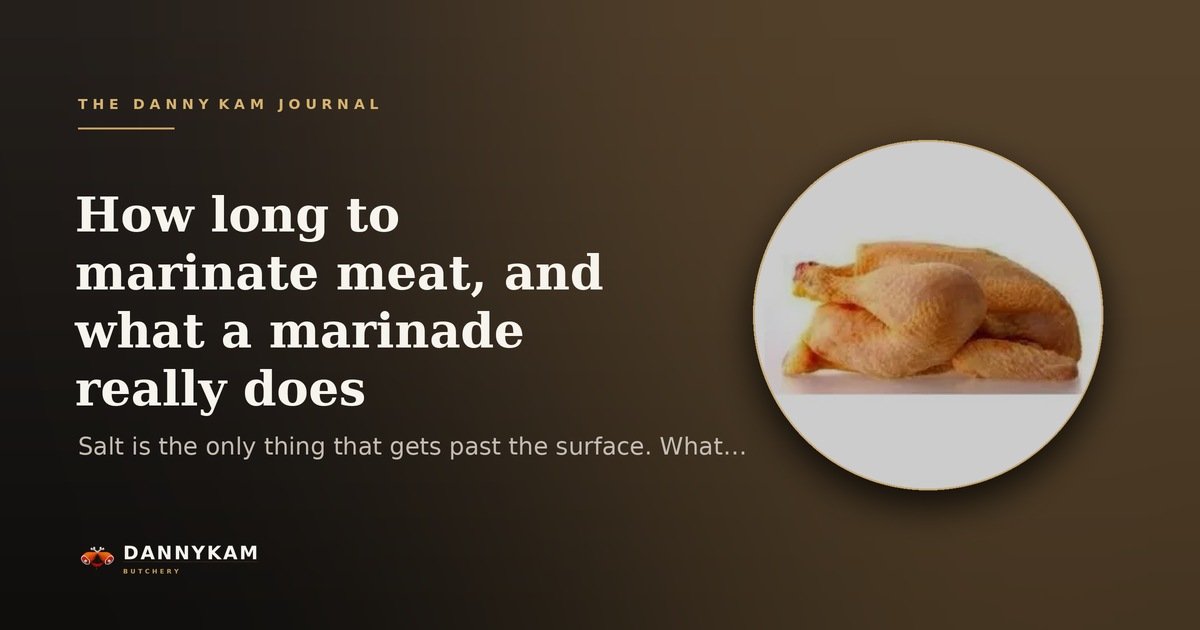
How long to marinate meat, and what a marinade really does
Salt is the only thing that gets past the surface. What acid does to beef, goat and chicken, how long each one can take, and three marinades worth keeping.
Read it →
Notes from behind the counter — how to pick meat that is actually fresh, how much to buy for a crowd, and what to do with the cuts people usually walk past.
Salt is the only thing that gets past the surface. What acid does to beef, goat and chicken, how long each one can take, and three marinades worth keeping.
Read it →Thigh, drumstick, breast or wings, bone in or boneless. What each cut is actually for, how long each one takes, and the sum that tells you whether bone-in is really cheaper.
Read it →One bird is lean and needs an hour in the pot. The other is tender in twenty minutes. How to tell them apart at the counter, and cook each the way it wants.
Read it →Two bags of mince can look identical and cook nothing alike. What mince is ground from, which fat ratio suits burgers and which suits sauces, and how to brown it without boiling it.
Read it →Buy in two waves, freeze in portions, and know how many kilos twenty people actually eat. The maths for a Nairobi December.
Read it →Dry meat is usually not the butcher's fault. It is a big lump, a bag full of air, and a thaw on the kitchen counter three weeks earlier.
Read it →Fillet is tender because it never worked. These five are the ones that worked, which is why they taste of something and cost half as much.
Read it →The cheapest protein in the butchery and the most often ruined. Cleaning is the whole job with matumbo; with liver it is heat and time.
Read it →One is bone, fat and connective tissue that turns a stew rich. The other is trim of unknown origin. They are not interchangeable, and they are not the same price.
Read it →