
Should you wash meat before cooking?

Almost every week someone at the stall tells me they rinse the meat under the tap before it goes in the pot, to clean it. It is the most common thing home cooks do to meat and one of the few things that makes it worse. Running it under water spreads what you are trying to get rid of, and it costs you the browning.
What rinsing actually removes
Very little. The bacteria that matter on raw meat sit on the surface and in the cut fibres, and they cling hard enough that water alone does not lift them. What a running tap does do is splash. Water hitting a piece of beef throws droplets carrying whatever was on the meat onto the sink, the tap handle, the wall behind it, the cloth hanging nearby, and any plate waiting within arm's reach. You then wipe that cloth over the next thing you touch.

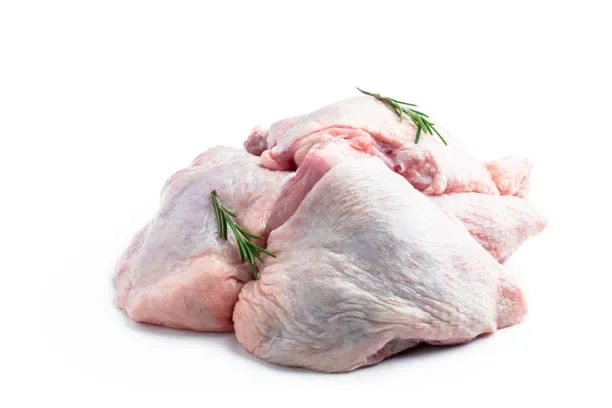
Water also does not kill anything. Heat does that, and the heat that matters is the temperature inside the meat, not the temperature of the tap.
What to do instead
Take the meat out of its paper, tip away any blood and liquid left in the bag, and pat the surface dry with kitchen paper. If there is a bone chip or a strip of silver skin the butcher missed, trim it with a clean knife. That is the whole preparation. Bin the paper, wash your hands with soap for twenty seconds, and wash the knife and board in hot soapy water afterwards.
The dry surface is not decoration
This is the part that decides what lands on the plate. Meat will not brown while it is wet. Surface water has to boil off before the surface can climb past 100C, and browning only starts somewhere above 140C. So a wet piece of beef dropped into a hot pan steams for several minutes, and by the time the pan recovers, the meat has released more liquid and you are stewing it in its own juice. Pat it dry, salt it, and let the pan come back to heat between batches. A crowded, wet pan is the most common reason a home steak comes out grey.
Board and knife order
If one meal involves raw meat and something that will not be cooked, do the vegetables first. Cut the salad, the onion that goes on top, the garnish, then the meat. Better still, keep two boards and let one see nothing but raw meat.
Wooden boards are fine if they go through hot soapy water and dry properly. A board left damp in the sink is not fine, because that is exactly where it stays wet and warm. Wash the knife between jobs too, not just the board. It is the knife handle and the tap that people forget.
In the fridge
Raw meat goes on the lowest shelf, on a plate or in a bowl deep enough to catch the liquid, never above anything you will eat cold. Chicken stored above the salad is how a Saturday turns bad. Keep the fridge between 0C and 4C.
Because the meat we sell has never been frozen, it will not keep as long as something that came straight out of a freezer. As a working guide, counting from the day you buy it:
- Mince and offal: one to two days, and no longer.
- Chicken: two days.
- Whole cuts of beef: three to four days.
- Goat and mutton: three to four days, much the same as beef.
Past those windows, cook it or freeze it. If you are not sure whether it is still good, treat that as your answer.
Thawing, if it was frozen at home
Overnight on the bottom shelf of the fridge, in a container. If you are in a hurry, seal it in a bag and sit it in cold water, changing the water every half hour. Not on the counter, and not in warm water. Once it is thawed, cook it, and do not put it back in the freezer.
Marinades and the spoon
A marinade that has had raw meat sitting in it is not a sauce. If you want to serve it, pour it into a small pan and boil it hard for three minutes. Otherwise tip it out, and do not dip a spoon into it and then into the pot.
When it is actually done
Colour is a poor guide, especially with goat and with anything cooked in a dark sauce. If you have a thermometer: chicken and anything minced to 74C, whole cuts of beef 55C for rare up to 63C for medium, goat and mutton 70C to 75C and then rested. Without a thermometer, cut into the thickest piece and check that the juices run clear and the fibres pull apart instead of fighting the knife.
What a clean kitchen actually looks like
Cold meat, dry surfaces, separate boards, hands washed between jobs, and meat that is either cooked through or rested properly. None of it takes longer than the rinsing did.
Cuts are cut to order at City Market Stall 56, any weight from 0.5 kg, halal, never frozen, and we deliver the same day anywhere in Nairobi. Pay on M-Pesa till 9700565.
Cut to order, never frozen, delivered across Nairobi the same day if you order by 6:30 PM.
See what we have today →