Why your beef comes out tough, and how to fix it
When a customer tells me the meat from last week was tough, I ask two things: which cut, and how long it sat in the pot. The answer usually explains it. Toughness is not bad luck and it is not the butcher cheating you. It is either a cut cooked the wrong way or a good cut cooked too long, and both are fixable at home.
Two kinds of tough
Muscle is fibres held together by connective tissue. How much of it there is depends on which part of the animal the cut came from, and how old the animal was.

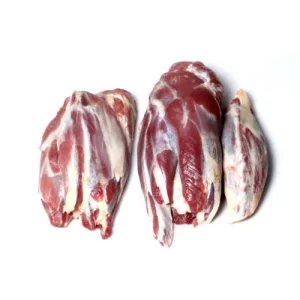
Working muscles carry a lot: neck, chaps, shin, oxtail, shoulder. These are genuinely tough raw and they stay tough if you cook them fast. Given time at the right temperature the connective tissue breaks down into gelatine and the meat turns soft and rich. That is why two and a half hours in a pot works where twenty minutes does not.
The other kind of tough is the lean cut with little connective tissue and little fat: fillet, rump, sirloin, eye of round. These are tender raw. Cook them past medium and the fibres squeeze out their water, and no amount of extra cooking brings it back. Longer cooking makes them worse.
So match the cut to the method, not the method to the cut.
Why hard boiling ruins a stew
The mistake I hear about most is a pot left at a rolling boil for ninety minutes, then served forty minutes later because people are hungry. At 100C the muscle fibres contract hard and push their moisture out. The connective tissue does eventually give way, but by then the meat is dry and stringy.
Aim for a simmer: small bubbles rising slowly at the side of the pot, not a churning surface. Collagen turns to gelatine steadily between about 70C and 90C, and that needs time rather than heat. Two hours at a gentle simmer gives softer meat than one hour at a boil.
The cut decides the method
- Neck, chaps, shin, oxtail: simmer or braise 2 to 3 hours. Best in a stew or a wet fry, where the sauce catches the gelatine.
- Shoulder and stewing beef: 90 minutes to 2 hours. Cut the cubes 4 to 5 cm across, not 2 cm, or they dry out before the middle softens.
- Rump, sirloin, fillet: high heat, short time. A piece 3 cm thick wants about 3 to 4 minutes a side, then a rest.
- Minced beef: no long cooking at all. Brown it and stop. Ten extra minutes of simmering turns it grainy.
Salt, and when to add it
Salt a stewing cut at the start, with the onions. It seasons the meat through, helps it brown, and in a wet dish the moisture it draws out goes back into the sauce.
For a steak or a roast, salt at least 40 minutes before cooking or right before the meat hits the pan. The awkward window is between about 3 and 40 minutes, when the salt has pulled water to the surface but the meat has not drawn it back in. In that window it steams instead of browning.
Acid, enzymes and bicarbonate
Lemon, vinegar, yoghurt and tomato do soften meat, but slowly and only near the surface. On a 4 cm cube of beef, a two-hour marinade flavours the outside and does little to the middle.
Raw papaya and pineapple work only too well. Leave meat in them overnight and the surface goes mushy and chalky. Half an hour to two hours is plenty, and only for thin pieces or mince.
Bicarbonate of soda is the one shortcut that genuinely tenderises a cut for stir-frying. A quarter teaspoon per 500 g, mixed through, left for 20 minutes, then rinsed and dried. More than that tastes of soap and turns the meat grey.
Rest it, then cut across the grain
Look at the direction the fibres run on the surface, and cut across that line, not along it. Every slice is then short fibre and easy to chew. Cut with the grain and you are serving long ropes of muscle, however well you cooked it.
Rest roasted or grilled meat for 5 to 10 minutes before carving, so the juices driven to the centre settle back through the meat instead of running out onto the board.
How to know it is done
A fork should go into a stewing cut with a little resistance and twist, the meat holding together rather than falling into strings. If it collapses into shreds it is past its best for a stew, though it will still make good soup.
For a roast, a thermometer takes out the guesswork. Take it off the heat at 55C for medium rare and 60C for medium, and expect the meat to climb another 3 to 5 degrees as it rests.
If you are not sure which cut suits the dish you have in mind, ask when you order. Everything at the shop is halal and cut to order at City Market Stall 56, in any weight from 0.5 kg, and we deliver the same day across Nairobi. Pay on M-Pesa till 9700565.
Cut to order, never frozen, delivered across Nairobi the same day if you order by 6:30 PM.
See what we have today →