Kienyeji or broiler: which chicken to buy, and how to cook each one
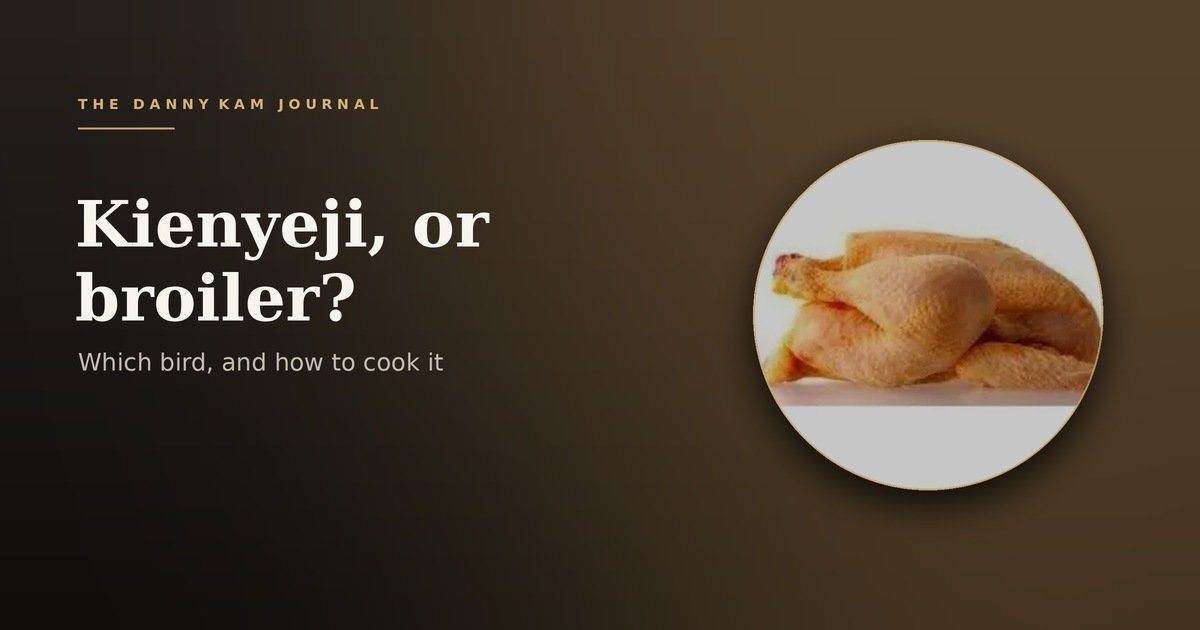
Two birds sit in our cold room most mornings and customers pick between them by price alone. That is the wrong way round. A kienyeji bird and a broiler are not the same ingredient at different prices. They behave differently in a pot, and the cooking method that suits one ruins the other.
What you are actually buying
A broiler is a young bird, slaughtered at around five to seven weeks. The muscles have done very little work, so the meat is soft and the skin is thin. It cooks fast. Anything you do to it for more than about half an hour will dry it out.
A kienyeji bird takes months to reach size, and it walks. The legs are longer, the breast is smaller, and the meat is denser with less fat under the skin. You cannot rush it. Cooked like a broiler it comes out tight and chewy, which is why so many people decide they do not like kienyeji chicken.
The flavour difference people talk about is real. Older muscle has more of the compounds that taste like chicken. It also has more connective tissue, and connective tissue needs time and moisture to soften.
How to tell them apart at the counter
You should not have to take anyone's word for it. Skin colour on a kienyeji bird runs more yellow than pink, and the skin itself is thicker and looser. Look at the legs. A kienyeji drumstick is thin and long with a narrow bone. A broiler leg is thick and short with a soft joint.
Size tells you something too. A whole kienyeji bird usually lands between 1.2 and 1.6 kilos. Broilers grown for the table often go past two.
Freshness is a separate check and it matters more than breed. The skin should be dry rather than tacky, the smell should be mild, and the meat should spring back when you press it. Grey edges or a sour note mean it has been sitting too long, whatever the label says.
Cooking kienyeji
Give it a pot of water before it ever sees heat from a pan. Put the pieces in with onion, ginger, garlic, a little salt and enough water to come halfway up. Simmer for 40 minutes, then check. Older birds may need an hour. When a knife slides through the thigh without resistance, it is ready to finish.
From there you can fry it in its own fat with tomatoes and chilli, or finish it over coals for kuku choma. Boiling first means the meat is already cooked through, so the fire only has to brown the skin. That is the step people skip when they complain the chicken burned before it was done.
The broth is worth keeping. Strain it and use it for rice or a soup the next day.
Cooking broiler
Do the opposite. Dry the skin with paper towel, because wet skin steams instead of browning. Season it and leave it uncovered in the fridge for an hour if you have the time. Then cook it hot and quick: a hot pan for pieces, a hot oven or coals for a whole bird.
For a whole broiler, 45 minutes to an hour at 200°C, depending on size. For quarters and wings, 25 to 35 minutes. If you are grilling, keep the pieces moving and take them off as soon as the juices run clear.
A marinade with yoghurt or lemon helps here, but keep the sugar low. Sugar burns before the meat is cooked and leaves you with a black skin and a raw centre.
The mistakes that ruin both
The first is using one method for both birds. Kienyeji boiled for ten minutes and thrown on a grill will fight your teeth. Broiler simmered for an hour will fall apart into strings.
The second is cold chicken straight from the fridge into a hot pan. The outside overcooks while the inside stays cool. Let it sit out for twenty minutes first.
The third is salting at the start of a long boil. Salt early in a long cook pulls moisture out. Salt the kienyeji when it goes into the pan for frying, and salt broiler before it hits the heat.
How much to buy
A whole broiler of about 1.5 kilos feeds four people with a side. If chicken is the main thing on the plate and the eaters are hungry, count half a bird per person. For a gathering of ten, three whole birds plus a pot of stew is a safer bet than four birds and no sides.
Kienyeji yields less meat per kilo because of the bone and the leaner frame. Two kienyeji birds do the work of one and a half broilers.
Keeping it
Fresh chicken goes in the fridge and gets cooked within a day or two. If you are not cooking it that soon, portion it and freeze it the day you buy it. Frozen chicken keeps about three months before the fat starts to turn.
Thaw it in the fridge overnight, not on the counter. A bird thawed at room temperature spends hours in the range where bacteria multiply fastest, and no amount of cooking fixes that.
Order kienyeji or broiler from the counter and we will cut it the way you want it, or send it whole. Both are in the cold room today.
Cut to order, never frozen, delivered across Nairobi the same day if you order by 6:30 PM.
See what we have today →