Chicken cuts: what to buy for the dish you are cooking
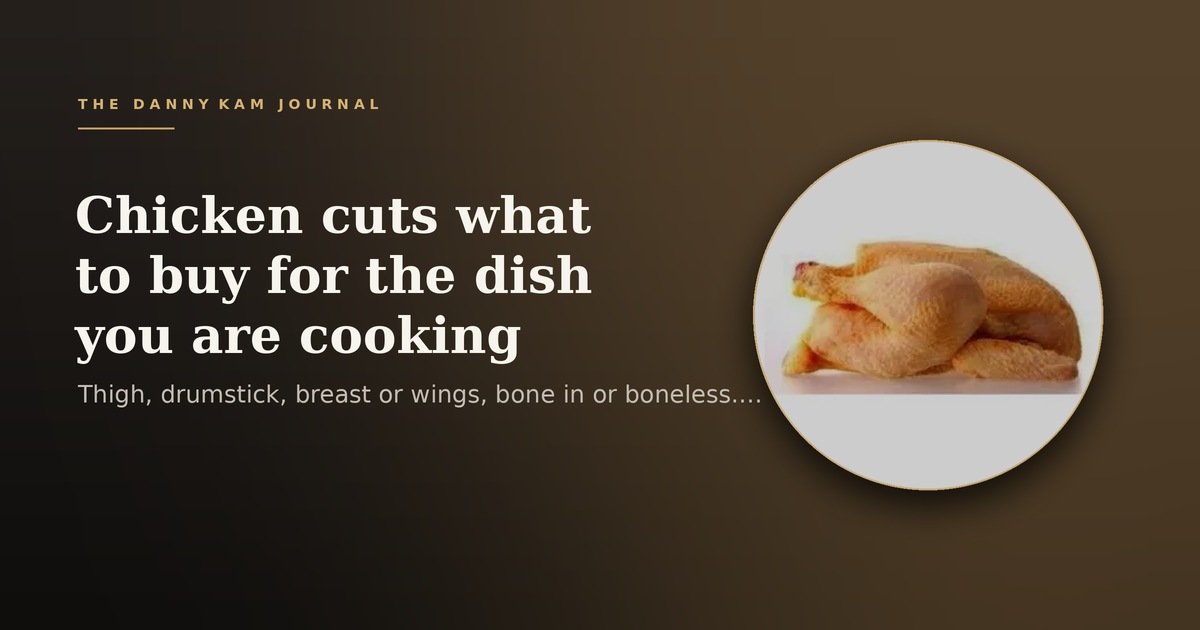
Walk into any butchery in Nairobi and you will see chicken in three forms: whole birds, portions, and skinless boneless fillets. The price per kilo climbs steeply from left to right, and most people assume the expensive end is the better meat. It is not better. It is only already butchered, and you are paying for the work and for the waste taken away before you arrived.
Bone in or boneless
Roughly a quarter to a third of the weight of a bone-in piece is bone. So you pay less per kilo, but you carry home less actual meat. A kilo of bone-in thigh gives you somewhere around 700 to 750 grams of meat. A kilo of boneless fillet gives you a full kilo. Once you do that sum, the gap narrows sharply.
Bones are not only weight. They carry marrow and connective tissue that thicken a stew and give it body, and the meat next to a bone stays juicier because the bone holds heat. The simple rule: if the dish has liquid in it, buy bone in. If the dish is a hot pan and nothing else, buy boneless.
The four pieces, and what each one is for
Thigh. Dark meat, more fat through it, and forgiving. Bone-in thigh is the best value in the shop for everyday Kenyan cooking: stews, curry, wet fry, pilau. It will survive twenty extra minutes on the fire where breast would be ruined.
Drumstick. The same dark meat in a different shape. Good roasted, good in a wet fry, and the piece children actually eat. Ask for drumsticks alone if you are feeding a table where the breast will sit unwanted.
Breast. Lean, cooks fast, dries fast. Fillets for a quick pan, strips for a stir fry, a whole breast butterflied and stuffed. Never put breast in a pot for forty minutes. It has almost no fat to protect it and goes stringy long before the sauce is ready.
Wings. Usually the cheapest per kilo, high in skin and fat, and the best piece for a hot oven or a grill. Roasted hard they crisp; simmered they turn flabby. Buy them for a crowd watching football, not for a curry.
Times that actually work
- Whole chicken around 1.4 kg, oven at 200C: about 80 minutes, then rest 10 minutes before carving.
- Bone-in thighs at 200C: 35 to 40 minutes.
- Drumsticks at 200C: 30 to 35 minutes.
- Wings at 200C: 25 minutes, turned once.
- Breast fillet in a hot pan: 4 to 5 minutes a side, then rest off the heat.
- Bone-in thigh in a stew or curry: simmer 40 minutes.
- Breast in a stew: 15 to 20 minutes at the very end, no more.
If you own a thermometer, use it. Breast is done at 74C. Thighs are better pushed to 80 to 85C, where the connective tissue breaks down and the meat stops being chewy. Cooking everything to exactly 74C gives you safe chicken that is still tough in the leg, which is why so many home roast chickens disappoint.
Whole bird, cut into eight
This is the order that gives the best of both worlds. Ask for one whole bird cut into eight: two drumsticks, two thighs, two wings and two breast halves, all still on the bone. You get four textures from one purchase, the breast cooks faster than the legs so you can start the legs first, and nothing is wasted. A bird of about 1.4 kg serves four to six people as a main with ugali and greens.
Ask them to keep the back and neck separate rather than binning them. Those pieces have almost no meat and make the best stock you will get for free: cover with water, simmer an hour with an onion, a carrot and a few peppercorns, then strain.
What to say at the counter
- Say how many people you are feeding and what you are cooking. That decides the cut faster than anything else.
- Say whether you want skin on or off. Skin protects the meat in a hot oven and carries most of the flavour. Take it off only for a curry, where it would go soft and pale in the liquid.
- Ask for eight pieces, or for curry pieces. Curry pieces are smaller and cut through the bone, which is what you want for a pot that will simmer for three quarters of an hour.
- Ask for the bones and trimmings if you cook with them. Most people never think to ask.
Kienyeji birds need a different hand
A kienyeji bird is older, with tighter muscle and far less fat under the skin. It will not be tender after forty minutes, and roasting it like a broiler is how people end up deciding kienyeji chicken is tough. Simmer it first in salted water with onion and ginger for thirty to forty minutes, then finish it in a hot oven or a dry pan to brown the skin. Treat it as a stew bird and it rewards you.
Everything at DannyKam Butchery is halal and cut to order at City Market Stall 56, and nothing sits in a freezer. Take any cut in any weight you like from half a kilo upwards, and we deliver the same day anywhere in Nairobi. Pay by M-Pesa till 9700565.
Cut to order, never frozen, delivered across Nairobi the same day if you order by 6:30 PM.
See what we have today →